Gun Games FPS Shooting Games
- 3.5
- Rating
- 10.00M
- Installs
- Free
- Price
 Analysis by App-foxy
I went into Gun Games FPS Shooting Games expecting a straightforward mobile shooter, and that is broadly what I found: a free role-playing game built around firearm-focused action, modern weapons, and a presentation aimed at players who want to start shooting quickly rather than spend a long time learning a complicated system. The store summary positions it as an offline three-dimensional FPS experience, so its main appeal is easy to understand. It is trying to give Android players a compact shooting game they can pick up without treating every session like a competitive event.
That simplicity is both its strongest quality and its biggest limitation. I enjoyed the directness when I wanted a short action session, but I also noticed that the game does not have the same depth or refinement I would expect from a larger console-style shooter. The average rating of 3.5 from roughly 16 thousand ratings reflects that mixed position: there is a real audience for it, but it is not a universal recommendation.
Interactive Dreams Inc is the developer, and the game has passed 10 million installs, which makes it easy to see why it appears in conversations about accessible mobile gun games. It is free to download, carries a Teen content rating, and includes optional purchases priced from $0.99 to $3.49 per item. I would approach it as a casual action game first and a full role-playing experience second.
You May Also Like

 Blood Strike: 2.5 Anniversary
Blood Strike’s Loadouts Turn Every Drop Into a Tactical Gamble
A close look at Blood Strike’s custom loadouts: how fast access to signature weapons reshapes its battle royale rhythm, rewards preparation, and narrows the gap between fights.

 Pandora - Music & Podcasts
Pandora’s Music Is Easy to Start, but Harder to Recover
Pandora’s strength is its low-effort path from a seed to a station. Its weak spot is how much confidence it asks you to place in connection, setup, and quiet recovery.

 8 Ball Pool
 Is Built on Rivalries, Rematches, and Routine
A close look at the rivalries, rematches, shared routines, and unanswered safety questions that turn a quick pool match into a persistent mobile community.

 Samsung Music
’s Quiet Strength Is Playing What You Already Own
Its reach comes less from spectacle than from dependable access to a personal library. That simplicity is both the app’s strongest retention engine and its ceiling.

 AccuWeather: Weather Radar
AccuWeather Review: A Quick, Clear Forecast for Everyday Decisions
For everyday plans, the best forecast is the one you can understand quickly. AccuWeather makes rain timing, radar, and local conditions easy to act on, with a few trade-offs.

 Hill Climb Racing
Why Hill Climb Racing Still Turns Crashes Into One More Run
A tiny car, a bumpy hill and one more upgrade: Hill Climb Racing keeps resurfacing because its simple chaos makes every near-miss feel personal.
More From Our News Desk
View All News


How the first session feels on a phone
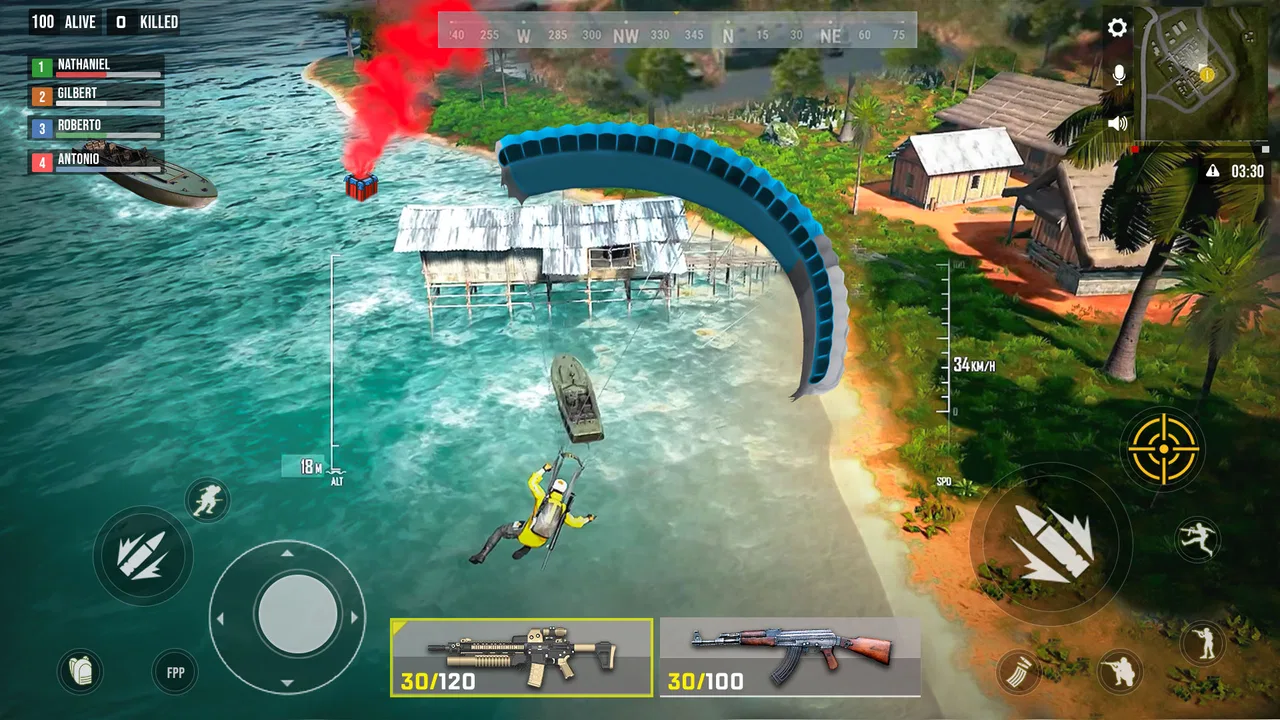
My first impression was shaped less by a deep story and more by how quickly the game communicates its purpose. The visual language points toward familiar FPS territory: weapons are the focus, the camera places me directly in the action, and the setting is designed to support shooting rather than slow exploration. That makes the opening easy to understand. If you have played a mobile shooter before, you can recognize the intended rhythm almost immediately.
This is useful for a particular kind of player. If I have a few minutes while waiting for transport or taking a break, I do not want to decode a large inventory or remember a complicated plot before I can enjoy myself. A game like this works better when I treat it as a quick burst of action. The offline positioning also makes it more practical for situations where I do not want to depend on a live multiplayer environment.
At the same time, the first impression is not likely to satisfy someone looking for a highly distinctive world. The premise is familiar, and the modern-weapon setting does not automatically create a memorable identity. The game’s job is to make the shooting feel available and understandable, not to reinvent the military-action genre. That distinction matters because the store label may attract players expecting a much larger FPS package than the game is really trying to be.
I also think the Teen rating is worth considering before installing it on a shared family device. The focus is combat, so this is not an all-ages cartoon shooter. Parents choosing games for younger children should judge it by that rating rather than by the simple wording of its short description.
A visual identity built around function
The art direction works best when it keeps attention on the weapon, target, and immediate surroundings. In a first-person shooter, that functional clarity is valuable. Busy decoration can make a small screen harder to read, especially when touch controls already occupy part of the display. Here, the military-action look gives the game a recognizable mood without requiring the player to study every corner of the environment.
My reservation is that a familiar visual approach can also make individual moments blend together. When a game leans heavily on standard FPS imagery, the sense of place depends on level variety, lighting, sound, and pacing. If those elements do not change enough, the experience can begin to feel like a sequence of shooting exercises instead of a journey through a world. I would not choose this title primarily for visual storytelling; I would choose it for its accessible action framework.
That is not necessarily a flaw. Some players prefer a game that does not interrupt its central activity with long conversations or elaborate world-building. I usually appreciate that approach when I am playing on a phone, because mobile sessions are often fragmented. The trade-off is simple: less narrative friction means faster play, but it can also mean less emotional investment in the setting.
Why the offline angle changes the use case
The offline focus gives the game a practical role that many larger shooters do not fill as comfortably. I can imagine using it on a flight, in a weak-signal area, or during a short break when I want something more active than a puzzle but less demanding than a live competitive match. It also removes the pressure of joining a lobby or dealing with other players when I only want to practice aiming and movement.
That convenience comes with a clear trade-off. Offline play is usually better for reliability and personal pacing, while online alternatives tend to offer more unpredictable opponents, social interaction, and longer-term competition. If your main reason for playing FPS games is ranking against real people, this is probably not the best destination. If you want a self-contained shooting session, its design makes more sense.
A useful routine is to play it as a short warm-up rather than as an all-evening commitment. I would use the first session to adjust the controls, learn how quickly targets appear, and decide whether the aiming response feels comfortable on my particular phone. That small test is more valuable than judging the game from screenshots, because touch sensitivity and screen size strongly affect whether an FPS feels natural.
Sound, pacing, and the mood between encounters
The game’s sound and pacing have an important job: they need to make familiar shooting feel active without turning every moment into noise. The setting suggests a tense, combat-focused mood, and the rhythm works best when visual confirmation, weapon response, and target movement arrive in a readable sequence. When those pieces line up, even a simple encounter can feel satisfying because the player understands why a shot worked or failed.
I prefer this kind of readable rhythm on mobile. A phone screen is smaller than a television, and touch input is less precise than a dedicated controller. If the game moves too quickly or fills the scene with too many competing effects, I start reacting to confusion rather than making decisions. A more measured pace gives me time to identify a target, aim, and recover after firing.
The downside is that a controlled rhythm can become predictable. Players who want constant pressure, large-scale battles, or a dramatic competitive soundtrack may find the experience restrained. I see it as a game that benefits from short, focused encounters rather than nonstop escalation. It is easier to enjoy when I accept that the atmosphere comes from repetition and concentration, not from a cinematic campaign.
Sound also affects how long I can comfortably play. On a phone, repeated weapon effects can become tiring if I use headphones at high volume. I would keep the volume moderate and take breaks, especially because the game’s central action is built around repeated firing. That is a small practical point, but it changes the mood: controlled audio makes the game feel focused, while excessive volume can make the same session feel harsh.
Finding a playable rhythm instead of rushing
One of my more useful observations is that rushing is not always the best way to approach a mobile FPS. Even when the game looks like a quick shooter, I get more from it when I pause briefly to read the scene and plan the next shot. This is especially helpful on a touchscreen, where frantic swipes can produce accidental movement or make the camera harder to control.
I would also avoid treating every encounter as a test of speed. A careful player can use the game’s straightforward structure to build a repeatable routine: settle the camera, identify the nearest threat, fire with intention, then reposition. That approach may sound basic, but it reduces the frustration that comes from fighting both the enemies and the controls at the same time.
The game is therefore more appealing to players who enjoy a steady action loop than to players who need constant novelty. Its mood is coherent when I allow the setting, weapon focus, and measured tempo to work together. It is less convincing when I expect every stage to deliver a new dramatic idea.
Where the role-playing label fits the shooting
As a role-playing game, it sits on the lighter side of the category. The shooting remains the main attraction, while the role-playing identity helps frame the player as someone progressing through combat-focused situations. I would not compare it directly with a story-heavy RPG filled with character relationships, dialogue choices, or expansive exploration. Its appeal comes from action first, with progression serving that action rather than replacing it.
That makes the game easier to approach than a complex RPG, but it also limits the kind of attachment it can create. Players who enjoy improving their performance through repeated play may find enough motivation in the combat loop. Players who need a rich cast, a detailed setting, or a long narrative arc should look toward a more traditional role-playing alternative.
The current version is 4.14, and the minimum requirement is Android 7.0. Those details make the game approachable for a broad range of Android devices, although actual comfort will still depend on the phone’s screen, performance, and touch response. I would not assume that an older compatible device will provide the same experience as a newer one. For an FPS, stable input matters as much as basic compatibility.
The optional purchases are another part of the decision. Since the game is free to start, I would first spend time learning whether the core shooting feels good before buying anything. The listed item range is modest, but even small purchases can change how a free game feels if the player starts viewing progress through the lens of spending. My advice is to treat purchases as optional conveniences, not as a reason to install the game.
Who will get the most from it
I think this game suits Android players who want an offline-friendly shooting experience, prefer familiar modern-weapon imagery, and do not need a large multiplayer community to stay interested. It is also a reasonable choice for someone moving from very simple mobile action games into first-person shooting and wanting a less intimidating starting point.
A realistic everyday scenario would be a ten-minute break during a commute. I could launch the game, play a few encounters without waiting for opponents, and stop when the break ends. That is where the design makes practical sense. The game does not need to become a daily obsession to be useful; it can simply provide an accessible action session when I have limited time.
I would skip it if my priority is esports-style competition, advanced tactical teamwork, or a strong cinematic story. I would also be cautious if I dislike repeated shooting loops or if I expect every weapon and location to feel radically different. Larger online shooters are better for social competition, while story-driven RPGs are better for character development and exploration.
How it compares with familiar alternatives
Compared with online FPS games, this title is less socially demanding and potentially more convenient for disconnected play. There is no need to organize a team for the kind of quick session I have in mind. The cost is that offline action cannot provide the same human unpredictability as a match against real opponents.
Compared with arcade shooters, it places more emphasis on the first-person gunplay mood and modern combat presentation. That can make it feel more grounded than a brightly stylized action game, but it may also feel less playful. Compared with full RPGs, it keeps the attention on combat and reduces the amount of narrative work required from the player.
The best comparison is not “a smaller version of every major shooter.” It is a focused mobile option for players who value immediate access, familiar FPS conventions, and a self-contained routine. Once I judge it by that purpose, its strengths become clearer and its limitations are easier to accept.
My atmosphere verdict after settling into the loop
What I like most is the coherence between the game’s subject, art direction, and pacing. The modern-weapons setting supports the first-person view, the sound and action reinforce the combat mood, and the offline structure makes the experience practical for short sessions. Nothing about that combination is radically experimental, but it is understandable and easy to return to.
What holds it back is the same familiarity that makes it accessible. The game needs to rely on the quality of its moment-to-moment shooting because its broader identity is not as distinctive as that of a major story-driven or competitive release. If the controls feel good on your device, the straightforward structure can be enjoyable. If the aiming feels awkward, there may not be enough surrounding depth to compensate.
I would recommend trying it to anyone who wants a free Android role-playing shooter with an offline-oriented use case and a clear focus on modern firearms. I would not recommend installing it with the expectation of a complete console-style campaign, a deep RPG system, or a serious online tournament experience. My final view is positive but measured: this is best treated as a convenient action game for focused, repeatable sessions, not as the definitive FPS on mobile.
Because it is free, the sensible approach is to test the controls before judging the whole package. Play long enough to see whether the camera, aiming, sound, and encounter rhythm fit your hands and your patience. If they do, the game can fill the role of a dependable offline shooter. If they do not, the same familiar design may quickly feel repetitive, and a more specialized alternative would be a better use of your storage and time.
For me, that honest middle ground is where Gun Games FPS Shooting Games lands. It creates a recognizable combat atmosphere, keeps the mechanics easy to understand, and offers a practical option for players who want to shoot without entering a live multiplayer match. Its value depends less on ambition than on fit: for the right player and the right short session, it works; for anyone seeking depth, variety, or a memorable world, it is better viewed as a starting point rather than a final destination.
FAQs for Gun Games FPS Shooting Games
01What are the main features of Gun Games FPS Shooting Games?
Gun Games FPS Shooting Games offers a variety of immersive features, including realistic graphics, a wide range of weapons, and multiple game modes such as team deathmatch and capture the flag. The game also includes customizable controls and an intuitive user interface, ensuring a seamless gaming experience for both casual and hardcore players.
02Is Gun Games FPS Shooting Games suitable for all age groups?
Gun Games FPS Shooting Games is designed for players aged 16 and above due to its graphic content and intense shooting scenarios. Parents should review the game’s content and ratings to determine if it is appropriate for younger players, keeping in mind the violence and competitive nature inherent in FPS games.
03Does the game require an internet connection to play?
While Gun Games FPS Shooting Games offers offline modes for single-player campaigns, an internet connection is required for accessing multiplayer features and updates. Playing online enhances the experience by allowing you to compete with players worldwide and participate in seasonal events and live tournaments.
04What devices are compatible with Gun Games FPS Shooting Games?
Gun Games FPS Shooting Games is compatible with both Android and iOS devices. It requires a minimum operating system of Android 6.0 or iOS 11.0. For optimal performance, it is recommended to have at least 3GB of RAM and a modern processor to handle the high-quality graphics and fast-paced gameplay.
05Are there in-app purchases available in the game?
Yes, Gun Games FPS Shooting Games includes in-app purchases that allow players to enhance their gaming experience. You can buy weapon packs, character skins, and other premium content. However, the game is designed to be enjoyable without spending money, with plenty of free rewards and content to explore.
Pros
- Engaging multiplayer modes for varied gameplay.
- Impressive graphics with detailed environments.
- Wide range of weapons to customize loadouts.
- Regular updates with new maps and features.
- Smooth controls for an immersive experience.
Cons
- In-app purchases can be quite expensive.
- Requires a stable internet connection.
- High battery consumption during extended play.
- Occasional lag on older devices.
- Ads can interrupt gameplay sessions.

Gun Games FPS Shooting Games
Gallery